1 min read
Dental Grant Opportunities
Dental health is a fundamental part of overall health and well-being, yet many people, particularly those in rural and low-income areas, do not have...

3 min read
Mollie Williams, DrPH, MPH
July 2, 2026
Oral health is a routine part of pregnancy care that most pregnant patients never get. Roughly 40% of pregnant people have some form of periodontal disease, which is associated with adverse outcomes including preterm birth and low birth weight, yet dental visits during pregnancy are lower than before or after. Mobile dental programs can close that gap by bringing cleanings, exams, and treatment to patients during pregnancy and the postpartum period. This post covers why oral health matters in pregnancy and how a mobile dental model reaches patients who otherwise skip it.
Professional guidance is unambiguous. American College of Obstetricians and Gynecologists (ACOG) recommends oral health care during pregnancy and notes it is safe and important, not something to defer until after delivery (see the ACOG committee opinion on oral health in pregnancy).
Because pregnancy affects the mouth and the mouth may affect the pregnancy. Hormonal changes raise the risk of gum inflammation and periodontal disease, and about 40% of pregnant people have some form of periodontal disease (ACOG). Periodontal disease in pregnancy is associated with adverse outcomes including preterm birth and low birth weight.
Oral health also carries into the postpartum period and the infant. Untreated maternal dental disease is linked to transmission of cavity-causing bacteria to the child. Treating the parent is part of setting up the child's oral health, which makes maternal dental care a two-generation intervention.
A mix of access barriers and a persistent myth that dental care should wait. Dental visits during pregnancy run lower than before or after pregnancy, with one study finding about 31% of women visited a dentist during pregnancy against 47% afterward (see the study on dental care use among pregnant women). Some patients and even some clinicians wrongly believe dental treatment is unsafe in pregnancy, when guidance says otherwise.
Access is the other half. Dental coverage is patchy, dentists who take Medicaid are scarce in many areas, and adding a separate dental trip to a pregnancy already full of appointments is a lot to ask. Provider recommendation matters: patients told by a clinician that dental care is important during pregnancy are about twice as likely to go.
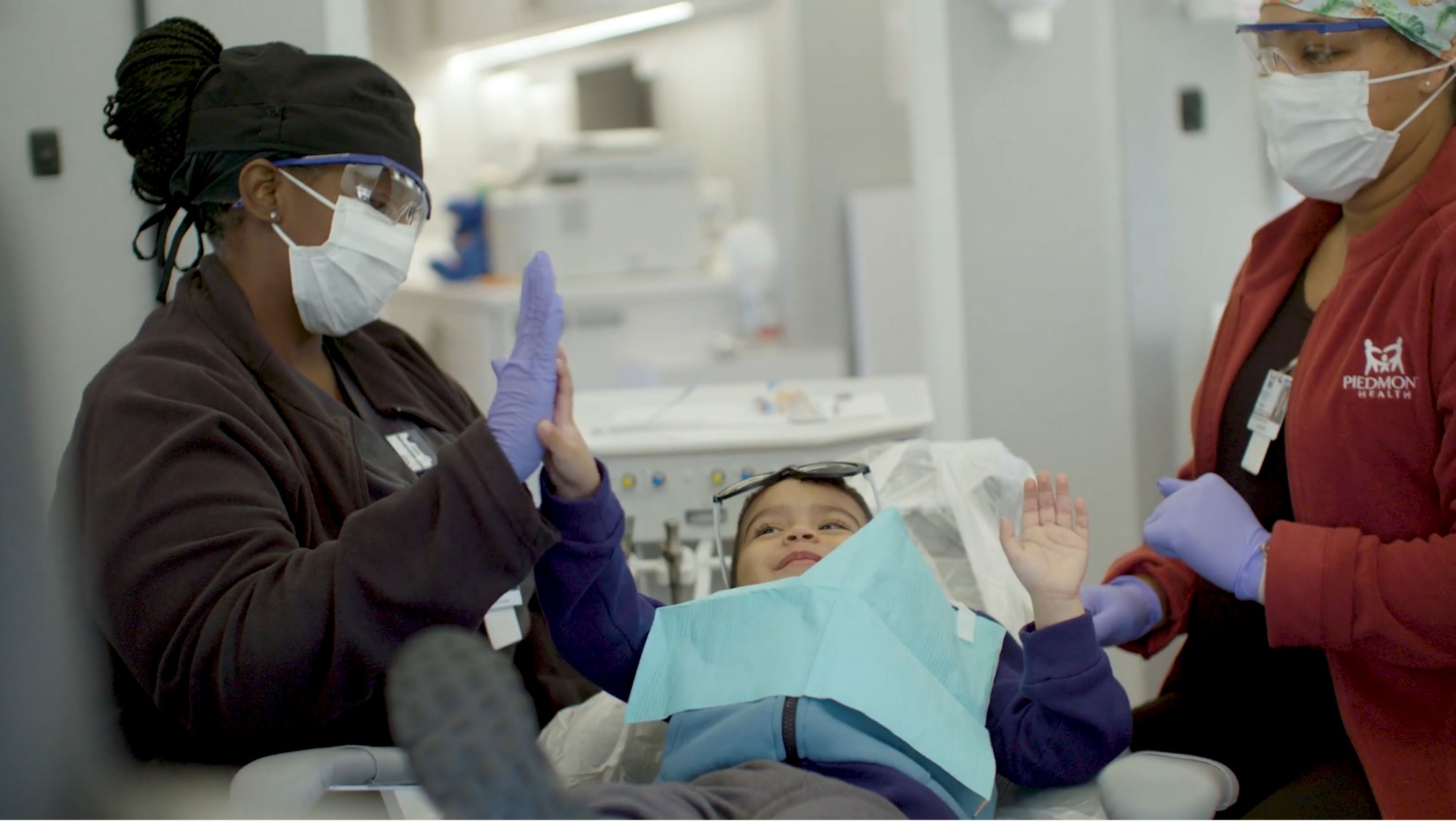
By bringing the dental operatory to the patient and pairing it with maternal care. A mobile dental unit can provide cleanings, exams, x-rays, and restorative treatment on site, at the same community locations where prenatal and postpartum care happens. Co-locating dental with maternal visits removes the separate trip and the myth in one move: the patient is already there, and the care team reinforces that dental care belongs in pregnancy.
That integration is the advantage. Rather than referring a pregnant patient to a dentist they will not reach, a mobile program delivers the cleaning or treatment during a visit they are already attending, and connects to a fixed dental practice for anything beyond the unit's scope.
Prevention of expensive downstream problems, for parent and child. Treating periodontal disease and untreated decay during pregnancy heads off pain, infection, and emergency dental visits, and it reduces the bacterial load that seeds a child's future cavities. Community dental screening and treatment tend to be cost-effective over time because they prevent the costlier disease that follows neglect (see the integrative review context on preventive access).
For a program making the funding case, maternal oral health is prevention with a clear mechanism and a two-generation payoff. Framing it that way, backed by the ACOG guidance and the periodontal-disease data, fits prevention-focused funders. Building that case is part of research and grant support.
Yes. ACOG recommends oral health care during pregnancy, including cleanings and needed treatment. The belief that dental care should wait until after delivery is a myth that keeps patients from care they need.
About 40% of pregnant people have some form of periodontal disease, which is associated with adverse outcomes including preterm birth and low birth weight. Pregnancy hormones raise the risk of gum inflammation.
Dental visits during pregnancy run lower than before or after, driven by access barriers, patchy coverage, few Medicaid dentists, the burden of a separate trip, and a myth that treatment is unsafe. A clinician's recommendation roughly doubles the likelihood of a visit.
Yes. A mobile dental unit can deliver cleanings, exams, x-rays, and restorative treatment at the same community sites as maternal care, removing the separate trip and connecting to a fixed practice for complex needs.
If oral health is missing from your maternal program, talk with our team. We build mobile dental programs that reach pregnant and postpartum patients where they already get care.
1 min read
Dental health is a fundamental part of overall health and well-being, yet many people, particularly those in rural and low-income areas, do not have...
1 min read
Mobile clinics have become an increasingly popular way to provide healthcare services to those in underserved communities. These clinics are a vital...
1 min read
Millions of older adults in the United States skip primary and dental care every year. The clinics exist. Getting there is the problem. Mobile health...