<img alt="" src="https://secure.agile-company-365.com/264630.png?trk_user=264630&amp;trk_tit=jsdisabled&amp;trk_ref=jsdisabled&amp;trk_loc=jsdisabled" height="0px" width="0px" style="display:none;">

3 min read

How Mobile Health programs improve access for older adults

How Mobile Health programs improve access for older adults
How Mobile Health programs improve access for older adults
6:17

Millions of older adults in the United States skip primary and dental care every year. The clinics exist. Getting there is the problem. Mobile health programs remove that barrier by bringing care directly to patients.

By the end of this post, you will understand what makes access so difficult for older adults, why dental care is part of that story, and how mobile health programs are built to address both.

Why older adults struggle to reach primary care

Older adults are among the heaviest users of the healthcare system. About 85 percent live with at least one chronic condition, and 60 percent manage two or more. That level of complexity requires consistent, coordinated care. For many older adults, consistent care is exactly what they cannot get.

Transportation is the first wall

Getting to a doctor's office is harder than it sounds. While about 70 percent of older adults still drive themselves to appointments, roughly 35 percent depend on a family member, friend, or paid driver to get there. When that help is unavailable, the appointment does not happen.

Missed appointments cascade: no refills, no monitoring of chronic conditions, more emergency room visits.

Provider shortages compound the problem

The Health Resources and Services Administration designates thousands of geographic areas across the country as Health Professional Shortage Areas. Rural communities bear the heaviest burden, but low-income urban neighborhoods face the same problem. An older adult in a shortage area may wait weeks for a routine visit, a delay manageable at 35 and dangerous at 75.

Physical barriers inside the clinic

Mobility limitations, low vision, and cognitive changes can make a standard clinic visit genuinely hard. Long waits in uncomfortable chairs, complex paperwork, and environments not designed for physical or sensory impairments all add up. Each barrier is small on its own. Together, they keep people home.

The dental care gap

Oral health is routinely treated as separate from medical care. Clinically, that separation does not hold.

Untreated dental disease in older adults is tied to cardiovascular disease, diabetes complications, aspiration pneumonia, and malnutrition from difficulty chewing. The mouth reflects the health of the rest of the body, and ignoring it in older adults carries real consequences.

Medicare's structural blind spot

Traditional Medicare (Parts A and B) does not cover routine dental care. That exclusion falls hardest on older adults with fixed incomes who cannot absorb the out-of-pocket cost of checkups, fillings, extractions, or dentures.

The consequences are measurable. An estimated 70 percent of adults over 65 have periodontal disease. Nearly one in five has lost all their teeth. These are health crises that deepen every other condition an older adult is already managing.

What a mobile health program actually delivers

A mobile health program functions as a full clinic on wheels. It arrives at senior living communities, rural church parking lots, and neighborhood centers wherever patients already are.

Removing the need to travel

For an older adult without a driver and without reliable transit, removing the transportation requirement is what makes care possible at all.

Programs that work schedule regular visits at places where older adults already gather. Consistency matters. A familiar provider at a familiar location builds the kind of trust that keeps patients engaged over time.

Primary care delivered to the patient

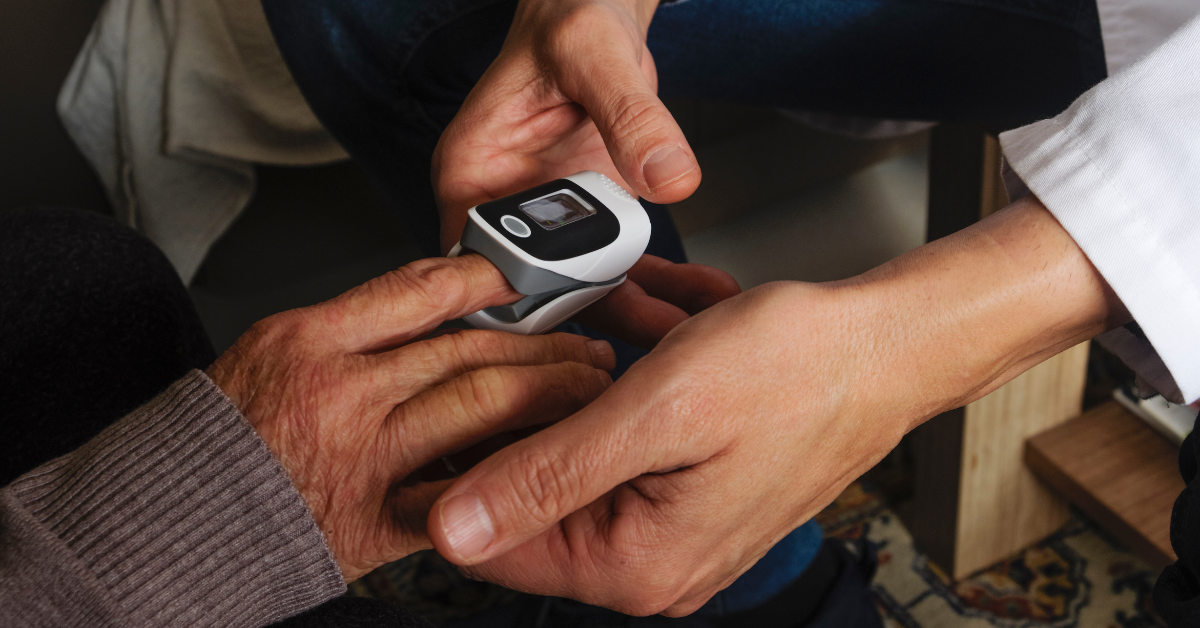
Mobile programs can deliver the same scope of services as a stationary clinic: chronic disease management for hypertension and diabetes, medication reconciliation, preventive screenings, mental health check-ins, and connections to specialists and social services.

For someone managing several conditions at once, a provider who knows their history, sees their living situation, and can link them to community resources is a fundamentally different experience than a rushed visit with a stranger.

Dental care in the same appointment

Programs that pair dental services with primary care can offer cleanings, fillings, extractions, oral cancer screenings, and denture fittings. Sliding-scale fees and Medicaid billing bring those services within reach for patients seeking accessible dental care.


The real value is coordination. A primary care provider and a dentist working within the same program can manage overlapping problems together. Poorly controlled blood sugar and advanced gum disease are connected conditions. Treating them in separate silos wastes time and puts patients at risk.

Designing for older adults

A mobile program is only as good as how it’s built and how mobile clinics are staffed. Programs that serve older adults well tend to share a few features.

  • Extended appointment times. Older patients often need more time to work through medications, multiple concerns, and paperwork. Rushed visits leave problems unaddressed.
  • Staff with geriatric training. How aging affects medication metabolism, falls risk, cognitive screening, and care planning is specialized knowledge, and it should be a baseline requirement.
  • Warm referrals. A visit that ends without a clear next step leaves patients stranded. The best programs maintain working relationships with specialists, social workers, food assistance programs, and housing services.
  • Low-friction scheduling. Simple intake, transparent billing, and a consistent provider make it more likely that older adults will return.

A growing need

By 2030, all baby boomers will be 65 or older, and 1 in every 5 Americans will be retirement age. Pressure on the healthcare system will grow. The current infrastructure is not positioned to absorb it.

Mobile health programs are one practical part of the answer, built for exactly the patients who have the hardest time reaching care any other way.

If your organization serves older adults or is working to close access gaps in your community, [contact us] to learn what a mobile health program could look like.


Just Three Hours Away: Mobile Healthcare and the Rural Health Access Crisis

Just Three Hours Away: Mobile Healthcare and the Rural Health Access Crisis

When a family lives “just three hours away” from care, the problem is not distance alone. It is the structure of the healthcare system.

Read More
Rolling Rescues: Transforming Rural Communities One Smile at a Time

Rolling Rescues: Transforming Rural Communities One Smile at a Time

Imagine having an agonizing toothache but no dentist for miles. In one rural Nevada town, local healthcare leaders took action after learning that...

Read More