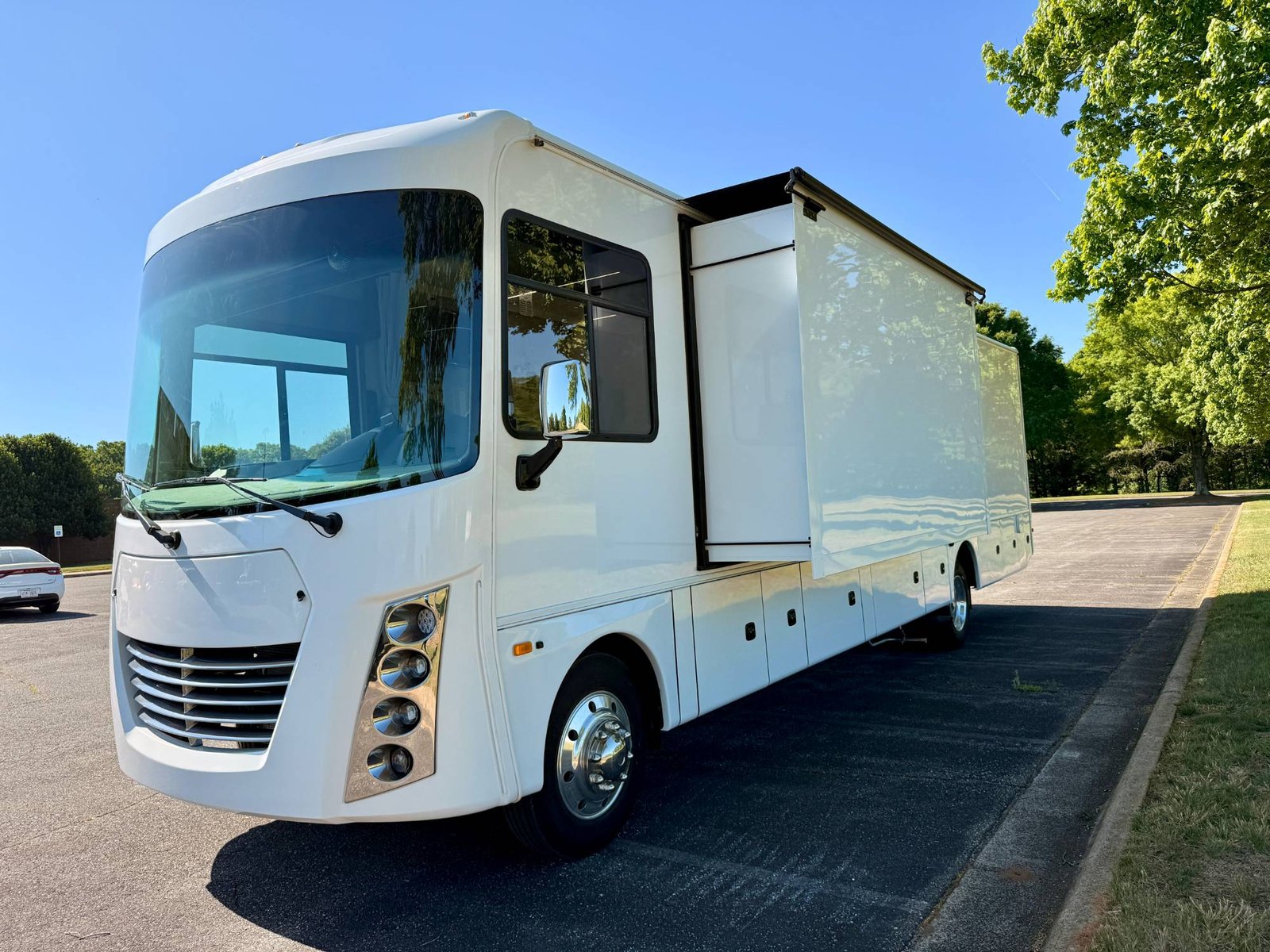
Once a week, a semi-trailer parks at the edge of the McRae Industries lot in Mount Gilead, North Carolina, a town of under 2,000 where 300 employees cut and sew leather for military boots. Inside, a physician assistant and a licensed practical nurse check blood pressure, test blood sugar, refill prescriptions, and treat minor infections. Hourly employees walk out to the trailer without clocking out. North Carolina Health News reported that McRae pays FirstHealth of the Carolinas a flat daily fee, and the visits cost employees nothing.
That is a mobile worksite clinic. It brings primary care, screenings, vaccines, and occupational health services to the place people already spend most of their day. It cannot replace a medical home, specialty care, or emergency care, and a well-run program says so plainly to employees and to the employer.
Most employer clinics belong to large companies
On-site clinics are a familiar benefit at big employers. The KFF Employer Health Benefits Survey found that 16 percent of firms with 50 or more employees that offer health benefits had an on-site or near-site clinic in 2023. KFF Health News reported that the share reached 30 percent or more among firms with 1,000 or more workers and about 20 percent among firms with 200 to 999.
A fixed clinic needs a building, a large enough workforce at one address, and staff on site every day. A plant with 300 employees in a small town may not keep a full-time clinician busy. A mobile unit can split its week among several employers, and FirstHealth served five employers in Montgomery County with the same unit.
Our comparison of onsite, near-site, and mobile employer clinics walks through the tradeoffs.
Employees lose care to the clock
More than half of U.S. wage and salary workers, 80.3 million people in 2024, are paid by the hour. For many of them, a doctor's appointment means unpaid time, a missed shift, or a supervisor's approval. In the 2024-25 BLS schedule survey, 31 percent of workers said taking an hour or two off during work would be difficult.
McRae saw the same pattern. Employees avoided routine care because it meant losing a few hours or half a day. A clinic in the parking lot removes the drive, the waiting room, and most of the lost time. The post on health care for shift workers and hourly employees covers this barrier in more detail.
The service menu sets the program
Worksite clinics range from a flu shot day to full primary care. Programs draw from three kinds of service:
- Primary and preventive care, such as acute visits, chronic disease checks, and medication refills
- Screenings and vaccines, such as blood pressure, glucose, cholesterol, and flu shots
- Occupational health, such as DOT physicals, hearing tests, drug screens, and minor injury care
Each choice affects staffing, equipment, billing, and even employees' health savings account eligibility. See what a mobile worksite clinic can offer for the details, and worksite health screening that leads to care for how screening turns into treatment.
Trust depends on privacy and continuity
Employees use a worksite clinic when they believe what they say stays with the care team. The clinic keeps its own medical records, reports to the employer only in aggregate, and keeps clinical staff out of HR decisions. Employee privacy at a worksite clinic explains the rules and the practices that build trust.
Continuity matters as much. A dedicated mobile team that comes back to the same plant every week learns names, follows up on last week's blood pressure, and notices who stopped coming. That relationship is the reason employees return.
The clinic belongs to a larger system
A worksite clinic that operates alone becomes one more piece of a fragmented system. Larry Boress, then executive director of the National Association of Worksite Health Centers, told North Carolina Health News that a center "has to be incorporated into the system" to deliver quality care. The FirstHealth physician assistant still sent patients to specialists, to imaging, and in one case to emergency bypass surgery.
For a health system or FQHC, that connection is the advantage. The mobile team can schedule referrals, share records with the patient's primary care clinician, and bring new patients into the system. In interviews with 25 health care leaders, Williams and colleagues (2023) found that mobile clinics can serve an organization's budget, strategy, culture, and equity goals together, which is the business case an employer contract supports.
Building an employer mobile clinic program covers pricing and contracts, and measuring a worksite clinic program covers how to report results without overpromising savings. The broader planning steps are in our guide on how to start a mobile health clinic.
Mission Mobile Medical plans, builds, and operates mobile health programs for health systems and health centers, including programs that serve local employers. Our health system solutions team can scope an employer program with you.