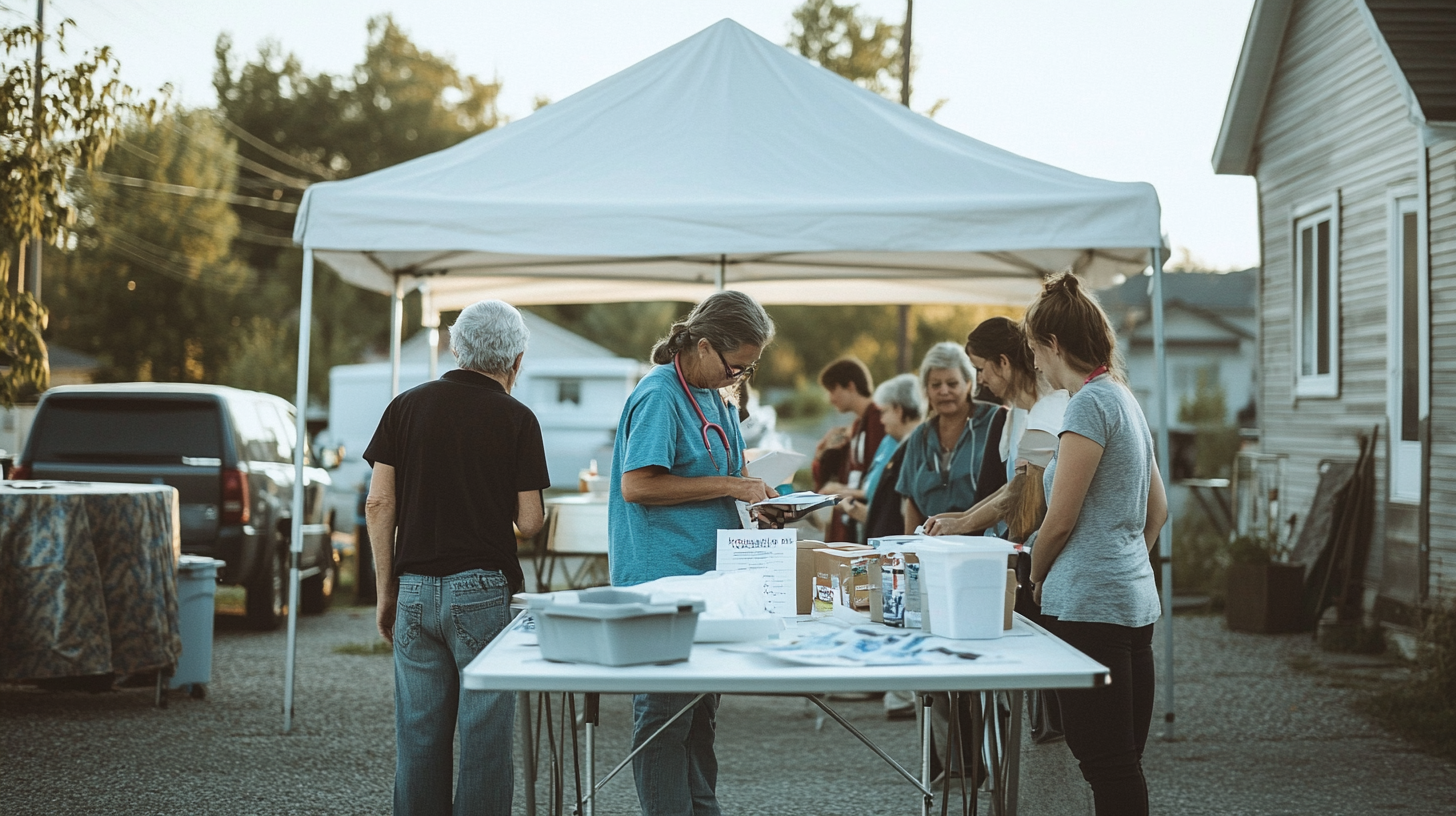
A community health needs assessment for a mobile program is the structured process of gathering data on who in your area lacks access to care, what conditions go unmet, and where people are hardest to reach, then using those findings to decide what your mobile clinic will offer and where it will go. It is the evidence base under every later decision: your service model, your routes, your staffing, and your grant applications.
The assessment matters because mobile programs succeed or fail on how well they match real need. According to Mission Mobile Medical's guide to starting a mobile health clinic, defining your target population is central to the program design phase, which typically takes two to three months. A good needs assessment is how you do that well. This post covers the data to gather, how to map deployment, how to turn findings into a service model, and how the assessment strengthens funding applications.
What is a community health assessment?
A community health needs assessment is a systematic review of the health conditions, access gaps, and demographics of a defined geographic area, done to identify unmet need and target services. For a mobile program, it answers three questions: who is underserved, what care do they need, and where are they.
It sits at the front of the Mission Mobile Medical guide's program design phase, the two-to-three-month stretch where you define your target population and services. Everything downstream depends on it. The platform you buy, the specialties you certify, the staff you hire, and the routes you run should all trace back to what the assessment found. Skipping it, or treating it as a formality, is how programs end up offering the wrong services in the wrong places. It is also the foundation for the mobile health clinic business plan, which draws its target population and service model directly from these findings.
What data should you gather (HPSA, uninsured, demographics, access gaps)
Gather data across four categories: shortage designations, insurance status, demographics, and access barriers. Together they show both the scale of need and its specific shape.
Start with Health Professional Shortage Areas (HPSAs). More than 60% of HPSAs are rural, and about 20% of the US population lives in a primary care HPSA. The HRSA dashboard lets you see whether your target area carries a shortage designation, which is both a signal of need and a factor in many funding programs.
Then pull the rest:
- Insurance status: uninsured and underinsured rates by area, which indicate demand for low-barrier care.
- Demographics: age, income, language, and chronic disease prevalence that shape which services to offer.
- Access barriers: distance to the nearest provider, transportation availability, and appointment wait times.
Access gaps often hide unmet clinical need. In one program, over 40% of participants had undiagnosed or uncontrolled hypertension and high cholesterol, which surfaced only once care reached them. That is the kind of finding an assessment is meant to anticipate and a mobile program is meant to catch.
How do you map where to deploy?
Turn your data into a map. Overlay shortage areas, uninsured concentrations, and transportation barriers to see where need is highest and existing care is thinnest. The overlap is where a mobile clinic does the most good.
HPSA data is a natural base layer, since more than 60% of HPSAs are rural and rural areas are exactly where distance and transportation compound the problem. Add the sites where your target population already gathers, such as schools, churches, food pantries, and employers, so the mobile clinic meets people where they are instead of asking them to travel.
Mapping also feeds your route and schedule design, which the Mission Mobile Medical guide treats as part of operations. A route grounded in the assessment is one you can defend to a board, a partner, or a funder. For programs that want help translating the analysis into a deployment plan, MMM's planning and staffing advisory support works through routing and scheduling alongside the clinical model.
How do you turn findings into a service model?
Let the findings pick your services. If the data shows high chronic disease prevalence and transportation barriers, a primary care and chronic disease management model fits. If it shows behavioral health shortages, that points a different direction. The service model should be the answer to the need the assessment documented, not a menu chosen in advance.
This is the heart of the Mission Mobile Medical guide's program design phase: defining your target population and the services that match it. From there, the model drives concrete choices. Chronic disease screening implies exam space and point-of-care testing. Behavioral health implies private consultation space and the right staffing. In every case, plan to hire staff dedicated to the mobile program rather than rotating in clinicians from a fixed site, so the model runs on a stable, committed team.
If maternal health surfaces in the data, scope it carefully. A mobile clinic can support care around pregnancy, such as prenatal visits and screenings, but it does not deliver babies; coordinate delivery with a partner facility. Once the model is set, it flows straight into the mobile health clinic business plan as your defined population and services.
How does the assessment strengthen grant applications?
A needs assessment is often the strongest section of a grant application, because it replaces assertion with evidence. Reviewers want to see that you understand the population, have quantified the gap, and have designed services to close it. The assessment gives you exactly that.
Cite recognized sources reviewers trust. HPSA designations from the HRSA dashboard carry weight, as do national findings on transportation barriers and on the undiagnosed disease mobile programs uncover. Pairing national context with your local data makes the case both credible and specific.
The assessment also matters because funding is layered. The Mission Mobile Medical guide finds most successful programs combine three to four funding sources, and each application draws on the same evidence base. MMM tracks more than 50 grant programs annually; its research and grant services and grant writing support help translate assessment findings into competitive applications across programs like HRSA and the Rural Health Transformation Program, which directs $50 billion to states from FY2026 to FY2030 with mobile among allowable uses.
Common mistakes
The most common mistake is skipping the assessment and designing services around what the organization already knows how to do. That produces a program mismatched to need. A related error is defining the population too broadly; "the underserved" is not a target you can plan routes or staffing around.
Other frequent problems include relying only on anecdote instead of data, ignoring transportation and other access barriers even though they drive a quarter or more of missed appointments, and treating the assessment as a one-time document rather than something you revisit as the program learns. Avoiding these keeps the program aligned with the community it set out to serve.
Frequently asked questions
How long does a community health needs assessment take?
Plan for it as part of the two-to-three-month program design phase described in the Mission Mobile Medical guide. Gathering and mapping data, then translating it into a service model, is the bulk of that work. Rushing it tends to produce a program mismatched to real need.
What data sources should I use?
Start with the HRSA shortage-area dashboard for HPSA designations, then add local uninsured rates, demographics, chronic disease prevalence, and access barriers such as distance and transportation. Combining national sources with local data gives you both credibility and specificity. Recognized federal sources also carry weight with grant reviewers.
How does the assessment connect to my business plan?
The assessment defines your target population and the services that match it, which are the core inputs to the business plan. The plan then builds the budget, staffing, and funding strategy on top of that foundation. Doing the assessment first keeps the whole plan grounded in evidence.
Do I need an assessment if I already know the community?
Yes. Firsthand knowledge is valuable, but funders and partners need documented evidence, and data often reveals gaps that are easy to miss, such as high rates of undiagnosed disease. A formal assessment turns what you know into something you can defend and fund.
Can the assessment help with multiple grant applications?
Yes. Because most successful programs combine three to four funding sources, a single strong assessment supplies the evidence base for many applications. That is why it pays to do it thoroughly once and reuse the findings across programs.
Need help turning your assessment into fundable applications? MMM's research and grant services team tracks more than 50 grant programs a year and can translate your findings into competitive proposals.