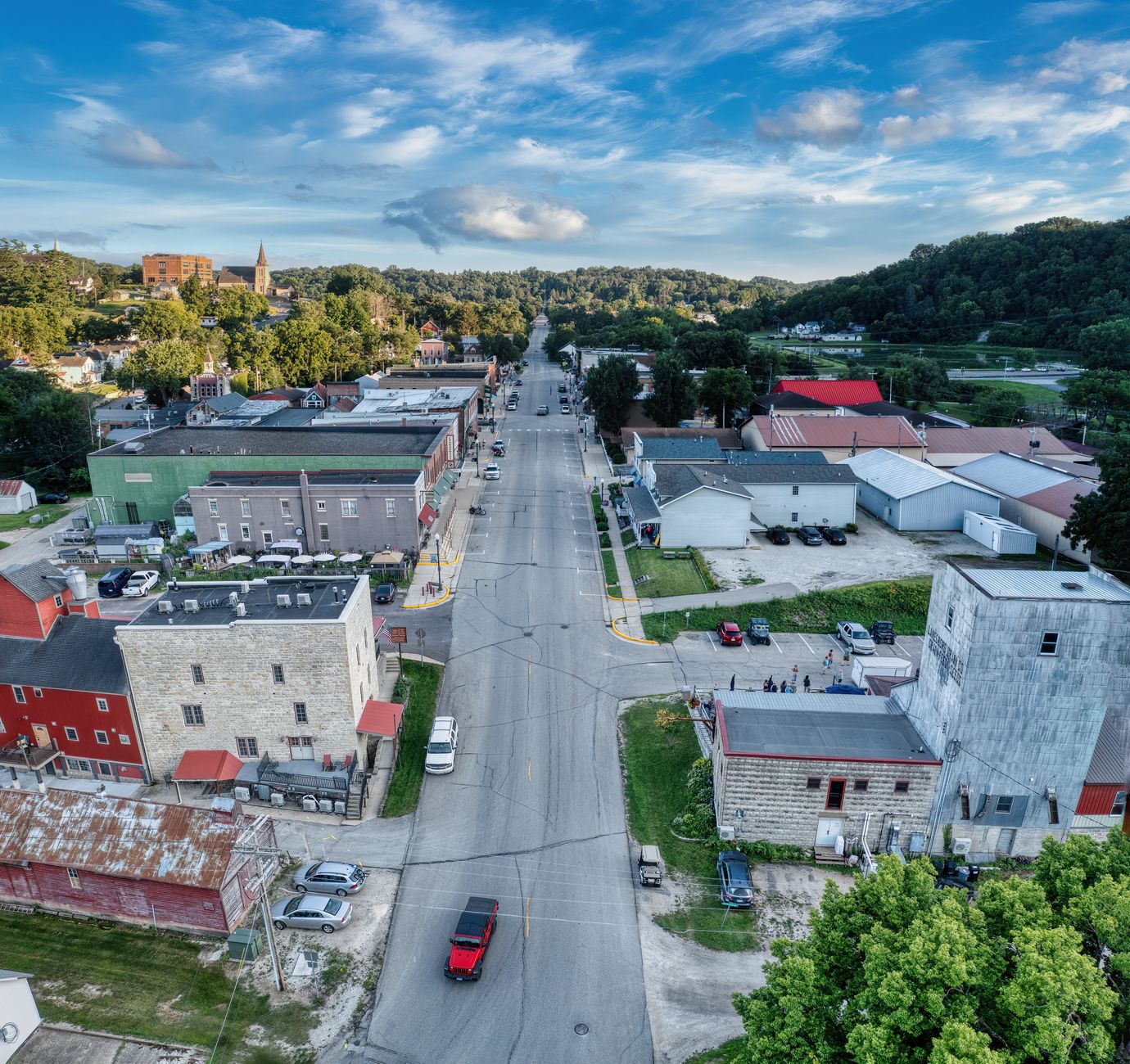
For the 66 million Americans who live in rural communities, healthcare is broken. Patients are sicker, care is harder to reach, and quality lags. This is not a new observation. Fixing rural healthcare delivery has been an evergreen challenge for as long as anyone in the industry can remember, and most attempts have quietly wound down.
We think the reason is simple. Most models try to bring a version of the urban clinic to the country and hope patients will drive to it. We built something different, and this is the thinking behind it.
The rural healthcare problem
The numbers are hard to look at. Rural residents experience a 23% higher mortality rate and a 40% higher preventable hospitalization rate than their urban counterparts. Roughly 65% of rural areas are designated primary care shortage regions. Ambulance response times can run double those in cities, and nearly one in ten rural patients waits more than 30 minutes for EMS.
The infrastructure keeps thinning out, too. Nearly 200 rural hospitals have closed since 2005, and several hundred more are at risk. When a hospital leaves a county, the specialists, the pharmacy, and often the last primary care option leave with it. The result is that one in five Americans is left with a geography problem that turns into a health problem.
Why rural care is structurally hard
Rural care is not hard by accident. Five structural forces work against it at the same time:
- Economics. Small populations cannot keep a full-time practice busy enough to sustain it.
- Payment. Fee-for-service rewards volume over value, which pushes health systems toward population centers.
- Staffing. A fixed facility has to be staffed all the time, whether or not there are enough patients that day to fill the schedule.
- Workforce. High training costs and personal financial risk keep many clinicians from choosing a rural practice even when they want to.
- Distance decay. The further someone has to travel, the less likely they are to seek primary care at all.
Where you live should not decide how long you live. Solving this means designing around those five forces instead of pretending they are not there.
A satellite primary care network
Our model borrows its logic from something that already works everywhere in America: the fire station network. Instead of one large facility that expects patients to come to it, we deploy a network of satellite primary care clinics placed close to the communities that need them.
Placement is guided by predictive analytics so that clinics land where they will do the most good. That turns a high-effort, low-engagement shortage area into a low-effort, high-engagement one, which is how you defeat distance decay. Each clinic aggregates patients from 5 – 10 outlying communities and can serve 1,500 – 2,500 patients on a weekly or bi-weekly rotation. That rotation is what produces the visit volume needed to actually move Quality measures.
Each care team delivers comprehensive primary care: preventive screening, chronic disease management, urgent care, medication reconciliation, behavioral health, and telehealth. Every program is co-designed with trusted local partners, including county health departments, social services, schools, churches, and community centers, so the work is community-driven and complementary rather than competitive.
One point matters more than any other. We are not a provider group. We are a remote clinical operations company that gives local provider groups the tools to succeed, because all success in healthcare is local. That is the only way a system like this stays effective, sustainable, and scalable.
Built and operated in one system
We build and manage the critical pieces of the delivery model ourselves: the clinical spaces, the technology, and the operating infrastructure. Keeping those in one system creates consistency across every site, and consistency compounds. The more the network runs, the more data it gathers, and the better it gets at placement, engagement, and outcomes over time.
It also matters that we are not venture-backed. There is no short-term investor clock, which means we can build for the long haul and stay flexible about how each program grows.
The return on investment
The model is built to deliver a return for risk-bearing organizations such as Medicaid managed care plans and rural health systems with Quality incentives. There are four dimensions of net benefit:
- Lower avoidable spending. Timely local care reduces unnecessary emergency department visits, which average $2,032 per non-urgent visit compared with under $200 for a primary care visit.
- More accurate revenue. Steady, community-based engagement produces better risk assessment and redetermination for hard-to-reach members, which we estimate at roughly $210,000 in annual revenue for every 2,000 members.
- Long-term quality gains. Better prenatal and postpartum care, blood pressure control, and diabetes management prevent expensive acute events. Moving those metrics in a rural population saves money.
- Competitive position. A managed care organization with a real rural strategy earns brand strength, wins more renewals, and stands a better chance in new markets.
The economics are designed to work without an up-front capital ask. A per-member-per-month base rate covers labor, and the margin is tied to Quality incentives on a tiered, withhold basis. As the model drives costs down through prevention and chronic disease management, the savings are shared. Once a population's baseline is established, we are willing to take on downside risk.
The offer is simple. We are not asking anyone to get married. We are asking you to try the model, and to share the savings when it works.
An invitation to poke holes
Feedback is the breakfast of champions, so here is a genuine invitation: please disagree with us. Come poke holes in the model. Tell us why taking on risk in Medicaid and rural populations will not work, or what headwind in your market we have not accounted for.
Many of us have family living on the front lines of rural America, so this is personal. We want more for the communities we serve than we want from them. The goal has not changed: put a satellite clinic within reach of every one of the 3,143 counties and parishes in the country, and finally get rural healthcare right for the 66 million Americans who call the country home.
If that is a future worth building, let's have a conversation.