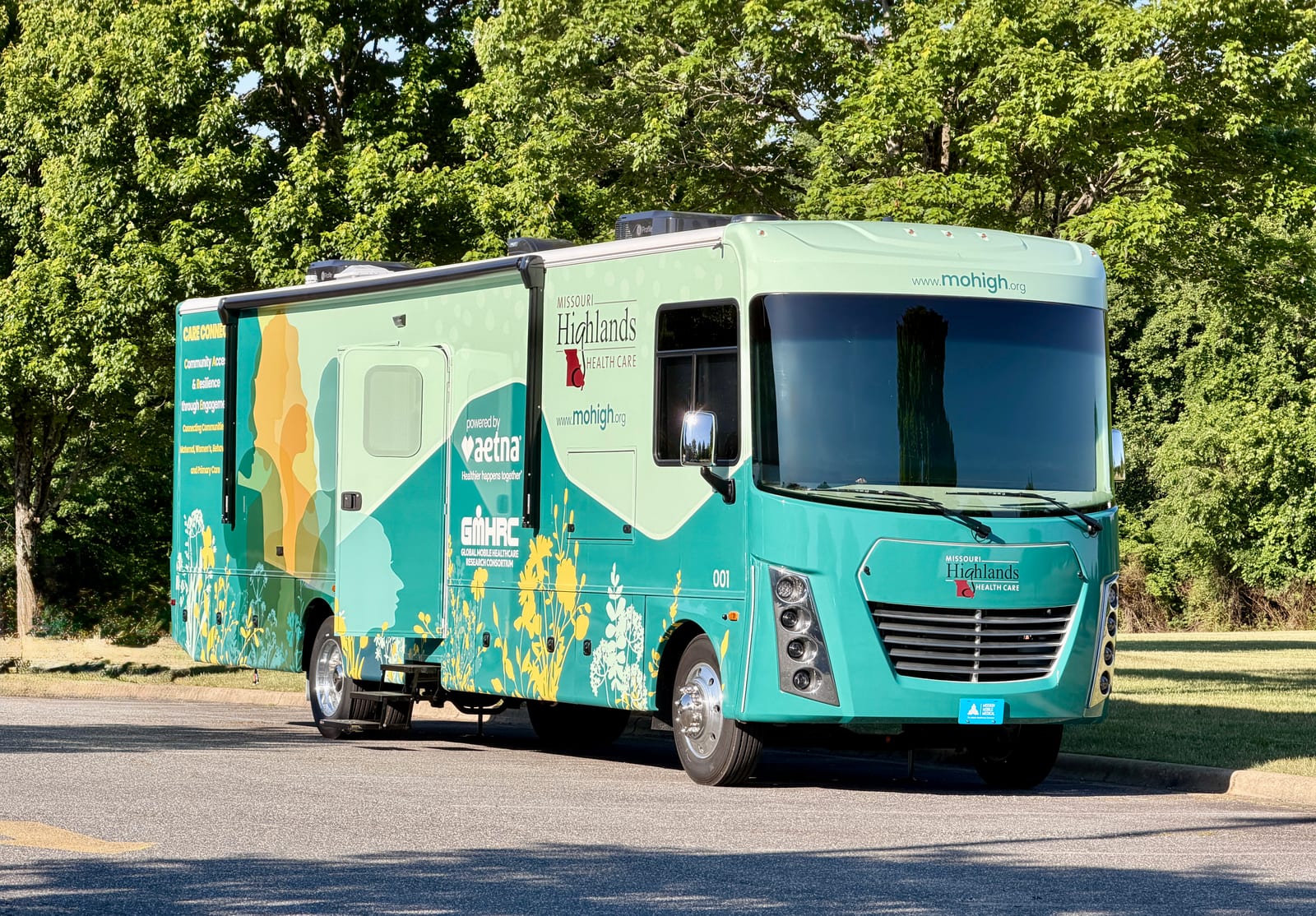
Mobile clinics and home-based primary care both bring services outside a medical office. The similarity ends there.
A mobile clinic parks at a community site and sees several people during a scheduled stop. Home-based primary care sends a clinician to one patient's residence. That distinction affects staffing, cost, daily capacity, equipment, and who can safely receive care.
National estimates identified about 2 million older adults who rarely or never left home and another 5.3 million who left only with help or significant difficulty. Patients who cannot leave home may need care at their residence. Many people who leave with difficulty can use a mobile clinic when the stop is close and accessible.
A mobile clinic serves several patients at one site
A mobile clinic may stop at senior housing, a senior center, a faith community, or a county building. During one visit, the team can provide Annual Wellness Visits, vaccinations, medication reviews, lab collection, and chronic disease follow-up for several patients.
This model generally fits people who can leave home but struggle to reach a distant office. The site needs accessible parking, a safe path into the clinic, a suitable waiting area, and enough privacy for the services offered.
A recurring route allows one team to serve several communities. It also limits how much equipment and specialty care are available at any one stop. The program needs referral relationships for services outside its scope.
Home-based care serves patients who cannot travel
Home-based primary care is designed for people whose medical conditions, frailty, mobility limitations, or cognitive impairment make leaving home difficult or unsafe. The clinician travels to each patient and provides care in the residence.
The model can reach people a community stop cannot. Travel between homes also limits how many patients a team can see in a day. A national analysis found that only 11 percent of homebound Medicare beneficiaries received any home-based medical care during the 2011 to 2017 study period.
Home-based programs may include physicians, nurse practitioners, nurses, social workers, therapists, and other professionals. Their structure depends on the patients served and the organization providing care.
The models side by side
| Mobile clinic | Home-based primary care | |
|---|---|---|
| Care location | Community stop | Patient's residence |
| Daily reach | Several patients per stop | One patient per destination |
| Best fit | Patients who can reach a nearby site | Patients who cannot safely leave home |
| Main strength | Brings services closer to many people | Reaches people excluded from site-based care |
| Main limit | The patient must reach the clinic | Travel limits daily patient volume |
Clear eligibility prevents missed expectations
Calling a community mobile stop a service for homebound adults can mislead patients and referring organizations. Someone who cannot leave an apartment may still be unable to reach a clinic parked outside.
Intake should assess mobility, available help, building accessibility, transportation, cognitive status, and whether leaving home creates a medical risk. The answer may point to a mobile clinic, home-based care, transportation support, or another service.
Our overview of mobile clinics for older adults explains where community mobile care fits.
Strong systems connect the two models
Some organizations offer both models. Others build referral agreements so each patient reaches the appropriate service. The handoff should cover current eligibility, required records, availability, expected response time, and who will follow up.
Both models need shared records and consistent staffing. Older patients often manage several conditions and medications. Clinicians need access to current treatment plans, recent hospital use, lab results, and specialist recommendations.
Mission Mobile Medical's planning and staffing advisors help organizations define eligibility, service scope, intake, and referral pathways for mobile programs.