Last updated: March 2026
What Is a Mobile Clinic?
At a Glance
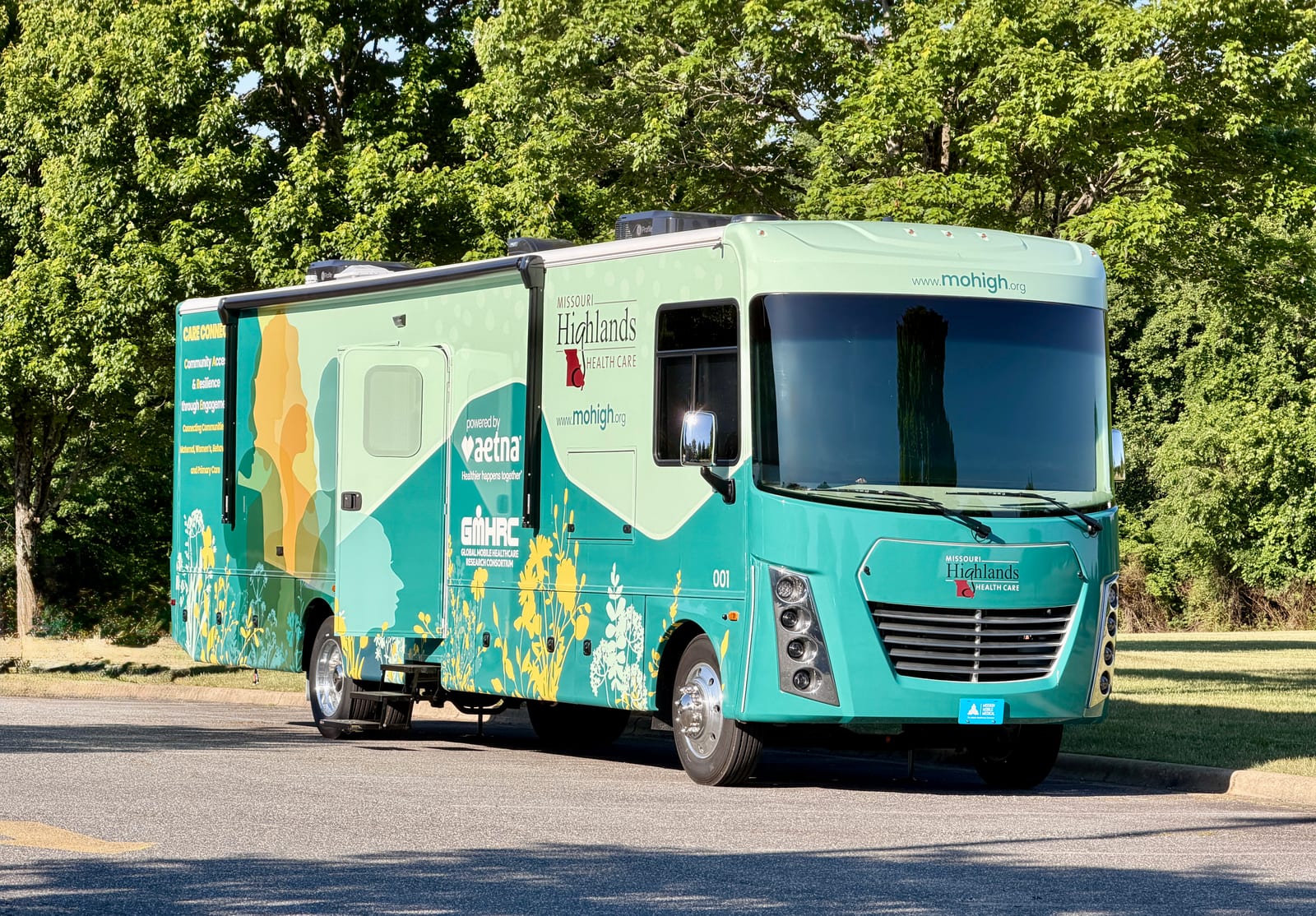
A mobile clinic is a self-contained healthcare facility built into a vehicle that travels directly to communities, worksites, schools, and neighborhoods to deliver medical, dental, or behavioral health services. Mobile clinics range in size from converted vans to full-length trailers equipped with exam rooms, dental operatories, or behavioral health treatment spaces. More than 66 million Americans live in rural areas with limited healthcare access, and mobile clinics offer a proven way to close those gaps by bringing care to patients rather than requiring patients to travel long distances to fixed-site facilities. Mobile health programs are operated by health systems, federally qualified health centers (FQHCs), managed care organizations, public health departments, employers, and universities across 42 states.
Mobile clinics are sometimes called mobile health units, mobile medical units, mobile health clinics, or care delivery platforms. The concept is straightforward: instead of asking patients to travel to a clinic, the clinic travels to the patients. This model has been in use for decades, but it has gained new urgency as healthcare systems face growing pressure to expand access, reduce costs, and improve outcomes in underserved communities.
The platforms themselves are purpose-built for clinical care. A mobile clinic typically includes private exam rooms, clinical workstations, ADA-compliant restrooms, HVAC systems, onboard generators for off-grid power, and cellular or WiFi connectivity for electronic health records and telehealth. Specialty clinics add features like dental operatories with X-ray equipment, laboratory draw stations, ultrasound capabilities, or secure medication dispensing windows for opioid treatment programs.
Why Mobile Clinics Matter
More than 66 million Americans live in rural areas. These communities face higher rates of chronic illness, including heart disease, hypertension, and diabetes, than their urban counterparts. For many rural residents, a single healthcare visit requires a drive of 27 minutes or more, and that assumes reliable transportation is available.
Transportation barriers are a leading cause of missed appointments, delayed care, and worsening health outcomes. The United States spends approximately $8 billion annually on non-emergency medical transportation (NEMT) services to address this problem, but NEMT has proven unreliable, susceptible to fraud, and contractors are increasingly unwilling to serve Medicaid populations.
Mobile clinics offer a proven, cost-effective alternative. Rather than moving patients to care, mobile health programs move care to patients. This approach:
- Reduces transportation barriers for underserved populations
- Improves access for high-risk, high-cost patient groups
- Closes care gaps in rural, frontier, and medically underserved communities
- Supports chronic disease management by meeting patients where they live
- Enables preventive care and screenings that reduce downstream costs
According to the Mobile Health Map, a research initiative tracking mobile health programs nationwide, mobile clinics consistently reach patients who would otherwise go without care. For health plans and managed care organizations, mobile programs can drive measurable improvements in HEDIS quality metrics and risk adjustment accuracy by reaching members who are difficult to engage through traditional outreach.
Types of Mobile Clinics
Mobile clinics are built to support a wide range of healthcare services. The most common types include medical, dental, behavioral health, and maternal health clinics. Each is designed with the clinical infrastructure required for its specialty.
Mobile Medical Clinics
These clinics deliver primary care services including wellness exams, chronic disease management, vaccinations, screenings, and acute care. A typical mobile medical clinic includes one or more exam rooms, a clinical workstation, and space for patient intake and waiting. Mobile medical clinics are used by health systems, FQHCs, health plans, and public health departments to expand their service footprint without constructing new facilities.
Mobile Dental Clinics
Mobile dental clinics bring oral healthcare to schools, rural communities, and underserved populations. These clinics feature fully equipped dental operatories with exam chairs, X-ray capabilities, and sterilization areas. Mobile dental programs are particularly effective for school-based dental care, where children who would otherwise miss care can receive cleanings, exams, and restorative treatments on campus.
Mobile Behavioral Health Clinics
Behavioral health mobile clinics provide mental health services, substance use treatment, and medication-assisted treatment (MAT) in community settings. These clinics are designed with private counseling spaces and secure medication dispensing areas for opioid treatment programs (OTPs). Mobile behavioral health programs reduce stigma by meeting patients in familiar environments and remove barriers that often prevent people from seeking treatment.
Mobile Maternal Health Clinics
These specialized clinics focus on prenatal care, postpartum support, and women's health services in communities with limited access to OB/GYN providers. Mobile maternal health programs are critical in addressing the maternal mortality crisis, particularly in rural areas where hospital labor and delivery units have closed. The United States has the highest maternal mortality rate among high-income nations, and mobile programs help fill geographic gaps in access to prenatal and postpartum care.
How Mobile Clinics Are Built
Mobile clinics are built on a variety of vehicle platforms depending on the program's service model, patient volume, and operational requirements.
Van-Based Clinics
Smaller mobile clinics built on cargo van or sprinter van chassis work well for targeted outreach, screenings, and single-provider services. They are easier to maneuver in urban environments and require less specialized driver training.
Trailer-Based Clinics
Fifth-wheel and gooseneck trailers offer more interior space and can be stationed at a location while the tow vehicle is used for other purposes. These are popular for programs that serve fixed sites on a regular schedule.
Bus and RV Conversions
Medium-duty and heavy-duty chassis provide the most interior space and can accommodate multiple exam rooms, waiting areas, and clinical workstations. These are the workhorses of high-volume mobile health programs.
Remanufactured vs. Custom-Built Equipment
Some organizations purchase custom-built mobile clinics from specialty vehicle manufacturers. Others choose remanufactured equipment, which uses certified pre-owned chassis that have been rebuilt to clinical specifications.
Remanufacturing offers several advantages:
- Faster delivery: Remanufactured platforms are typically available 6 months faster than custom builds
- Lower cost: Approximately 50% of the cost of new chassis*
- Proven reliability: Road-tested components with documented performance history
- Environmental benefit: Reduces waste by keeping viable chassis out of landfills
Mission Mobile Medical uses standardized chassis from major OEM manufacturers including Forest River (a Berkshire Hathaway company), Winnebago, and Thor Industries. These manufacturers have decades of engineering experience and warranty data, producing equipment that is more reliable and repairable than small custom shop work. Five-year service data from Mission Mobile Medical's fleet shows 98%+ uptime across remanufactured platforms.
What's Inside a Mobile Clinic?
While configurations vary by specialty, most mobile clinics include private exam rooms, a clinical workstation, an intake and waiting area, an ADA-compliant restroom, secure storage for supplies and medications, HVAC, an onboard generator, a leveling system, and cellular or WiFi connectivity for electronic health records and telehealth. Each component is described below.
- Exam rooms: Private spaces for clinical encounters, typically 6x8 feet or larger
- Clinical workstations: Charting and documentation areas for providers
- Intake and waiting area: Space for patient registration and brief waiting
- Restroom: ADA-compliant facilities for patients
- Storage: Secure cabinets for supplies, medications, and equipment
- HVAC systems: Climate control for patient and provider comfort
- Generator: Onboard power for off-grid operation
- Leveling systems: Hydraulic or manual systems to stabilize the platform on uneven ground
- Connectivity: Cellular boosters, WiFi, and telehealth-ready infrastructure
Specialty clinics may include additional features such as dental operatories with panoramic X-ray equipment, laboratory draw stations, ultrasound and imaging equipment, or secure medication dispensing windows for behavioral health programs.
Who Uses Mobile Clinics?
Mobile health programs are operated by a diverse range of organizations. Each uses mobile clinics to solve a different set of access and delivery challenges.
Health Systems and Hospitals
Major health systems use mobile clinics to extend their service area, reduce emergency department overcrowding, and engage patients in preventive care. Mobile programs can reach patients who are attributed to the health system but face barriers to accessing fixed-site care.
Federally Qualified Health Centers (FQHCs)
FQHCs use mobile clinics to serve their safety-net mission, bringing care to homeless populations, migrant farmworkers, and residents of public housing. Mobile programs help FQHCs meet federal access requirements and serve designated catchment areas that may extend well beyond their brick-and-mortar locations.
Health Plans and Managed Care Organizations
Payers deploy mobile clinics to improve quality metrics, close care gaps, and reduce avoidable utilization among high-risk members. Mobile health programs can drive improvements in HEDIS measures, risk adjustment accuracy, and member engagement. Networked satellite clinic programs allow health plans to operationalize mobile health across multiple markets simultaneously.
State and Local Public Health Departments
Public health agencies use mobile clinics for immunization campaigns, disease surveillance, health education, and emergency response. Mobile clinics played a critical role during the COVID-19 pandemic in reaching underserved communities with testing and vaccination.
Employers and Corporations
Worksite health programs use mobile clinics to bring screenings, flu shots, and wellness services directly to employees, reducing absenteeism and improving workforce health.
Universities and Research Institutions
Academic medical centers use mobile clinics for community-based research, clinical trials, and medical education, bringing learners into community settings alongside practicing providers.
Launching a Mobile Health Program
Starting a mobile health program involves more than purchasing equipment. Successful programs require planning across several domains:
- Needs assessment: Understanding the target population, service gaps, and community priorities
- Site selection: Identifying deployment locations with adequate patient volume, parking, and utilities
- Staffing: Recruiting and training drivers, providers, and support staff
- Regulatory compliance: Meeting state licensing, vehicle registration, and clinical credentialing requirements
- Billing and reimbursement: Establishing payer contracts and coding workflows
- Community engagement: Building relationships with local organizations, faith communities, and referral partners
- Measurement and evaluation: Tracking patient volume, clinical outcomes, and financial performance
Many organizations underestimate the operational complexity of mobile health. Equipment breaks down. Staff turn over. Regulations change across state lines. Without systems in place, mobile clinics can become expensive liabilities rather than community assets.
This is why the most successful mobile health programs partner with experienced operators who can provide planning support, staff training, on-site maintenance, and ongoing technical assistance. The difference between a mobile clinic that improves community health and one that sits idle in the parking lot often comes down to the strength of the partnership behind it.
Need Help Planning a Mobile Health Program?
Mission Mobile Medical's advisory team helps organizations navigate needs assessments, financial modeling, regulatory compliance, staffing, and operational planning. Our team has supported mobile health programs across 42 states.
Learn About Advisory ServicesFrequently Asked Questions
These are the questions that come up first. The full mobile health program FAQ goes further, into deployment timelines, staffing models, financial structures, and compliance.
How much does a mobile clinic cost?
Mobile clinic costs vary significantly based on vehicle size, specialty configuration, and level of customization. Remanufactured units built on certified pre-owned chassis can cost approximately 50% less than custom new builds. Organizations that cannot make a large capital investment can lease mobile clinics or use turnkey contract services where a partner provides the clinic, staff, and operations under the client's brand. A longer answer, driver by driver, is in the guide to mobile medical clinic costs.
What types of services can a mobile clinic provide?
Mobile clinics deliver a wide range of healthcare services including primary care, dental care, behavioral health and substance use treatment, maternal health, specialty care, immunizations, health screenings, and chronic disease management. Configurations are customized to match the service model, from single-provider screening vans to multi-exam-room units supporting high-volume primary care.
Who operates mobile health clinics?
Mobile clinics are operated by health systems and hospitals, federally qualified health centers (FQHCs), managed care organizations and health plans, state and local public health departments, employers, and universities. Some organizations staff and operate their own mobile programs, while others use turnkey contract services where an experienced partner handles staffing, logistics, and day-to-day operations.
How long does it take to launch a mobile health program?
Launching a mobile health program typically takes 9 to 12 months when building from scratch, including needs assessment, vehicle procurement, regulatory compliance, staffing, and community engagement. Remanufactured platforms can reduce the equipment portion of that timeline by approximately 6 months compared to custom new builds. Organizations using turnkey contract services can launch faster because the operating partner provides the clinic, staff, and operational protocols.
What is the difference between a mobile clinic and a telehealth program?
A mobile clinic is a physical healthcare facility built into a vehicle that travels to communities and provides in-person care. A telehealth program delivers care remotely through video, phone, or digital tools. Some mobile clinics integrate telehealth capabilities to connect on-site patients with remote specialists, combining in-person access with virtual consultation.
Learn More About Mobile Health
Mission Mobile Medical serves more than 300 clients across the U.S., Puerto Rico, and Canada. As a Certified B Corporation, our team combines equipment, planning, staffing support, and operational systems into a single partnership. Whether you are exploring mobile health for the first time or looking to expand an existing program, our advisory team can help.
Contact Us Explore Services* All cost estimates are approximate and will vary based on the specifics of each program, including the type of clinic, services offered, geographic location, vehicle configuration, and vendor selected. Contact Mission Mobile Medical for a customized estimate based on your needs.